Our story
میراثWhere the food comes from
Afghanistan sits at the join of Persia, Central Asia, China and the subcontinent, and its cooking is the record of that. Every dish on our menu arrived from somewhere and then became Afghan. Here is where four of them came from.
Kabuli pulao
The rice is a technique before it is a recipe.
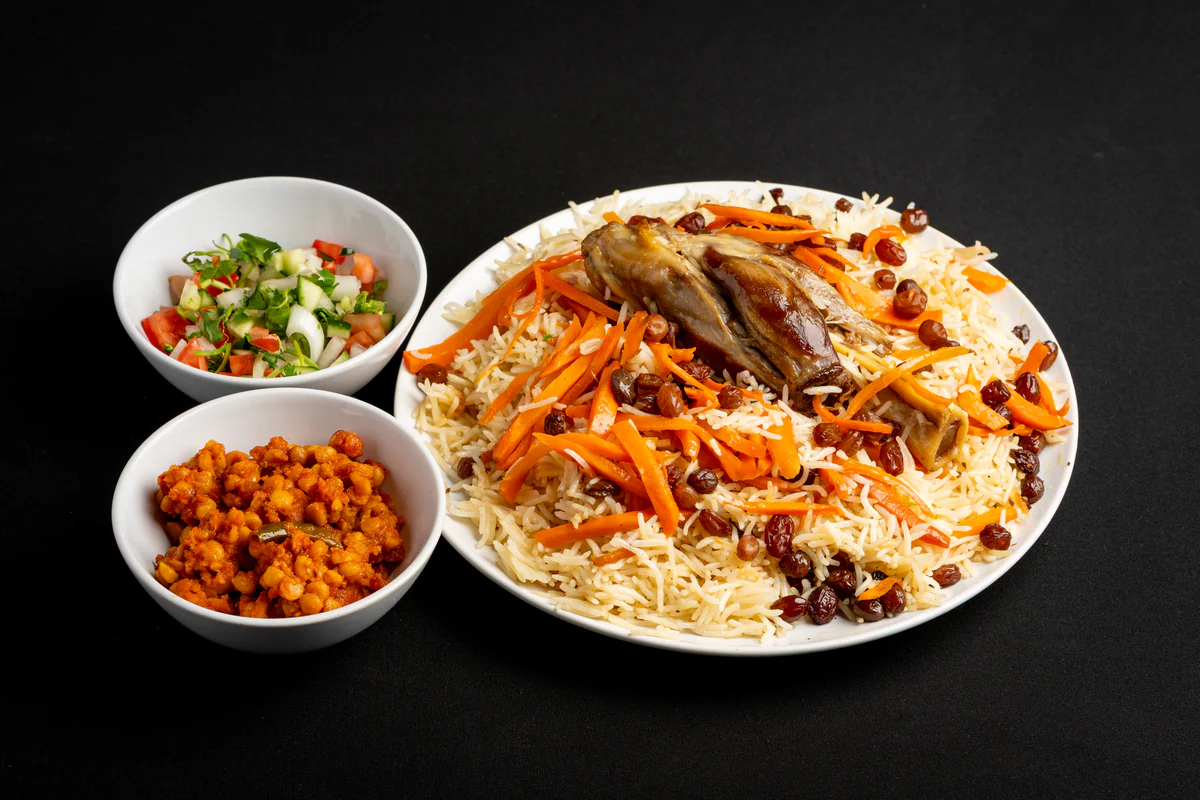
Steamed, never stirred. The rice is parboiled, drained, then finished slowly under a cloth-wrapped lid so the grains swell in trapped steam rather than boiling in water. That is the method Persian cooks refined and passed east, and it is why every grain stands separate instead of collapsing into a mass.
What makes it Kabuli is what goes on top: carrot cut into matchsticks and cooked in sugar until it glazes, raisins plumped in the same pan, and lamb underneath that has been in stock long enough to give in. It is the dish you cook when people are coming, which is how a regional plate becomes a national one.
Mantu & ashak
A dumpling that walked the whole way west.
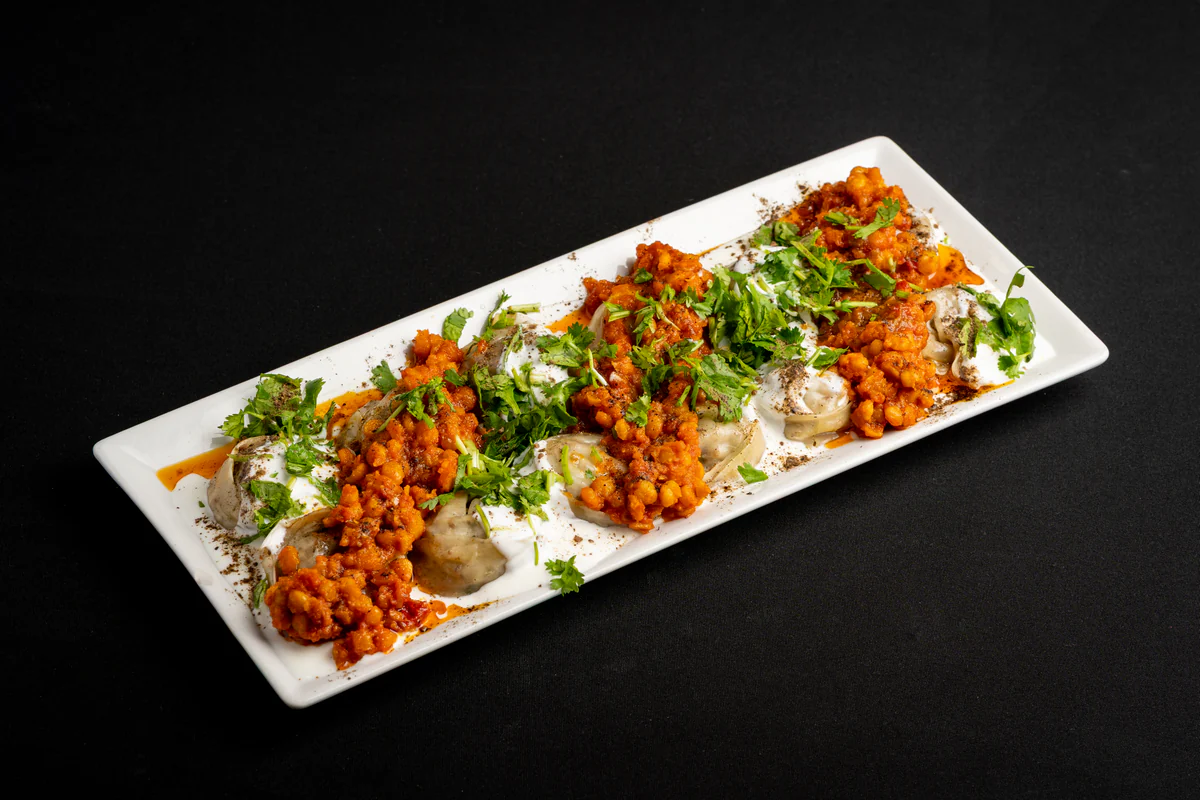
The filled dumpling moved along the trade routes in both directions and picked up a new name at every stop: jiaozi in China, manti in Central Asia, mantı in Turkey, manti again in Armenia. Afghan mantu sits close to the middle of that road and tastes like it. Central Asian wrapper, a spiced onion-heavy beef filling, and a finish that is entirely local.
That finish is the argument for it. Garlicky yogurt underneath, a split-pea and tomato sauce over the top, dried mint crushed on last. Ashak is the same idea handed to a vegetable: leek and spring onion inside, the same yogurt and mint outside.
Four kitchens
Four regions, four kitchens.
Ask an Afghan what the national dish is and you will get the same answer everywhere. Ask how to cook it and you will get an argument. Roughly, the country leans four ways.
- کابل
Kabul
The balance point. Rice, yogurt, and a light hand with the chilli.
- هرات
Herat
Closest to Persia. Saffron, green herbs, and sourness from fruit.
- قندهار
Kandahar
The hot south. Chilli, cumin, and everything that meets open fire.
- شمال
The North
Steppe cooking. Dumplings, wheat, and a lot of dairy.
From the coal
The oldest thing we cook, and the least changed.
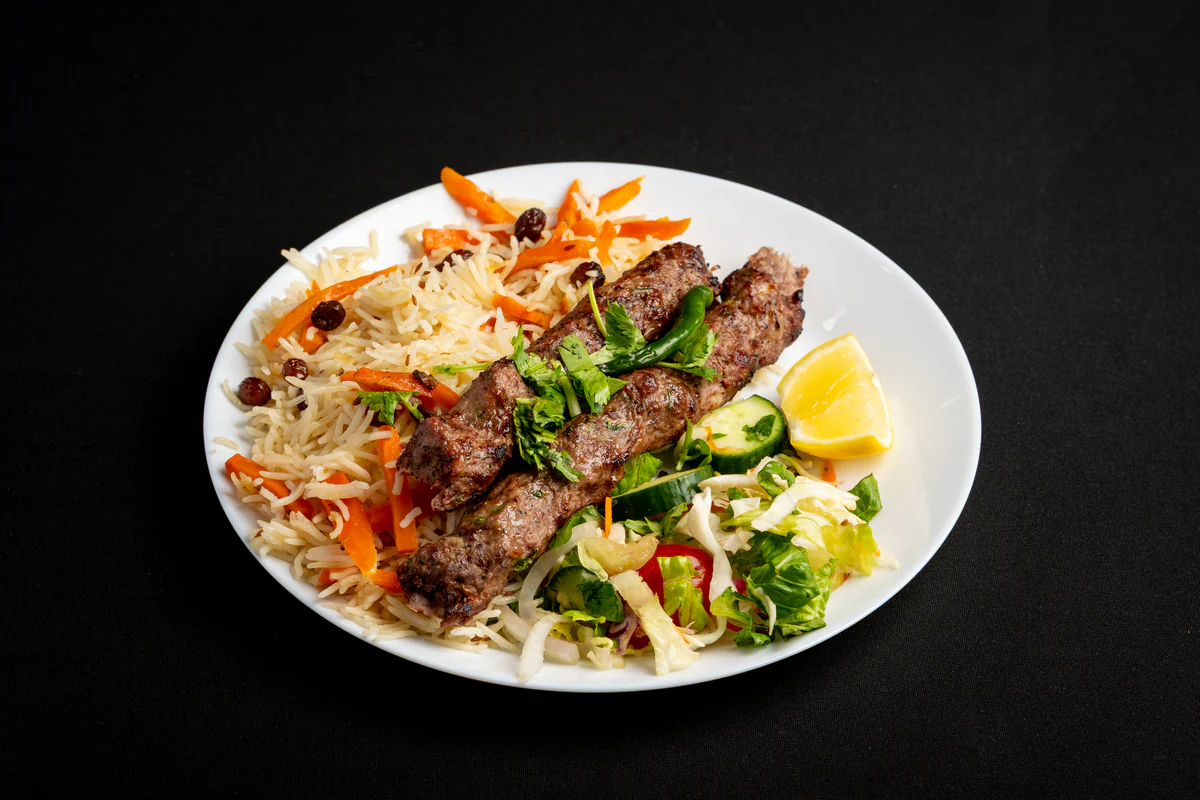
Meat over live fire predates every border in the region and most of the recipes in this country. What varies is the discipline around it: how the lamb is trimmed, how long it sits in onion and salt, how close the skewer goes to the coal, and when it comes off. There is nowhere to hide in a kabob, because there is no sauce and no long braise to correct a mistake later.
Chapli is the outlier and the southern one: a flat patty of minced beef bulked with tomato and green chilli, pressed thin so the whole surface crisps. The name comes from the word for sandal, which tells you the shape.
Bolani & naan
Bread from the north, cooked on a dry pan.
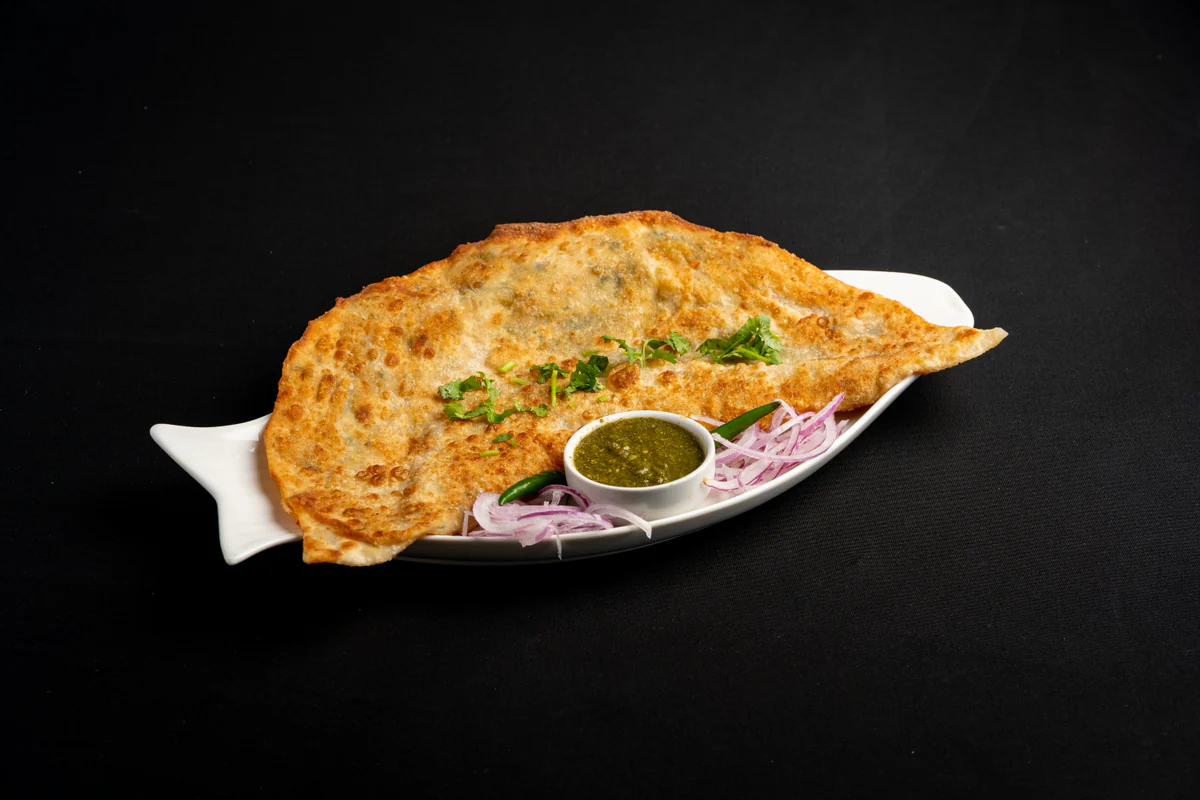
Bolani belongs to the northern provinces, to Balkh and Mazar and the wheat country. Thin dough folded around potato, or around gandana, the Afghan leek that has no exact equivalent in a Canadian supermarket, then cooked on a dry griddle until it blisters. Market food, eaten standing up, with yogurt to dip it in.
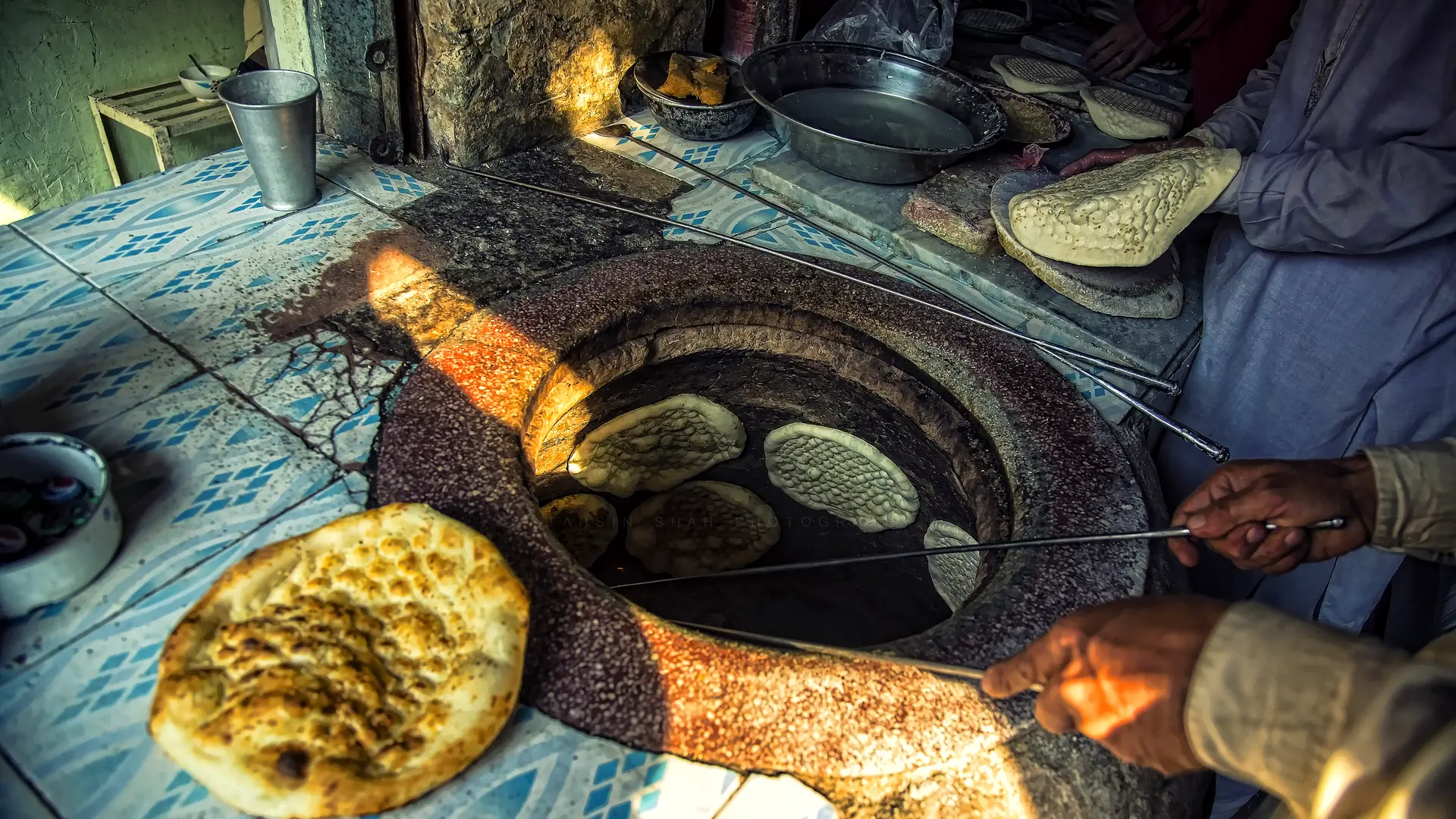
Naan is the other half of the same story and the one thing on the table nobody orders as a course. It comes out of the tandoor stretched long, scored down the middle, and it is on the table before anything else is.
How to eat it
Order too much and put it in the middle.
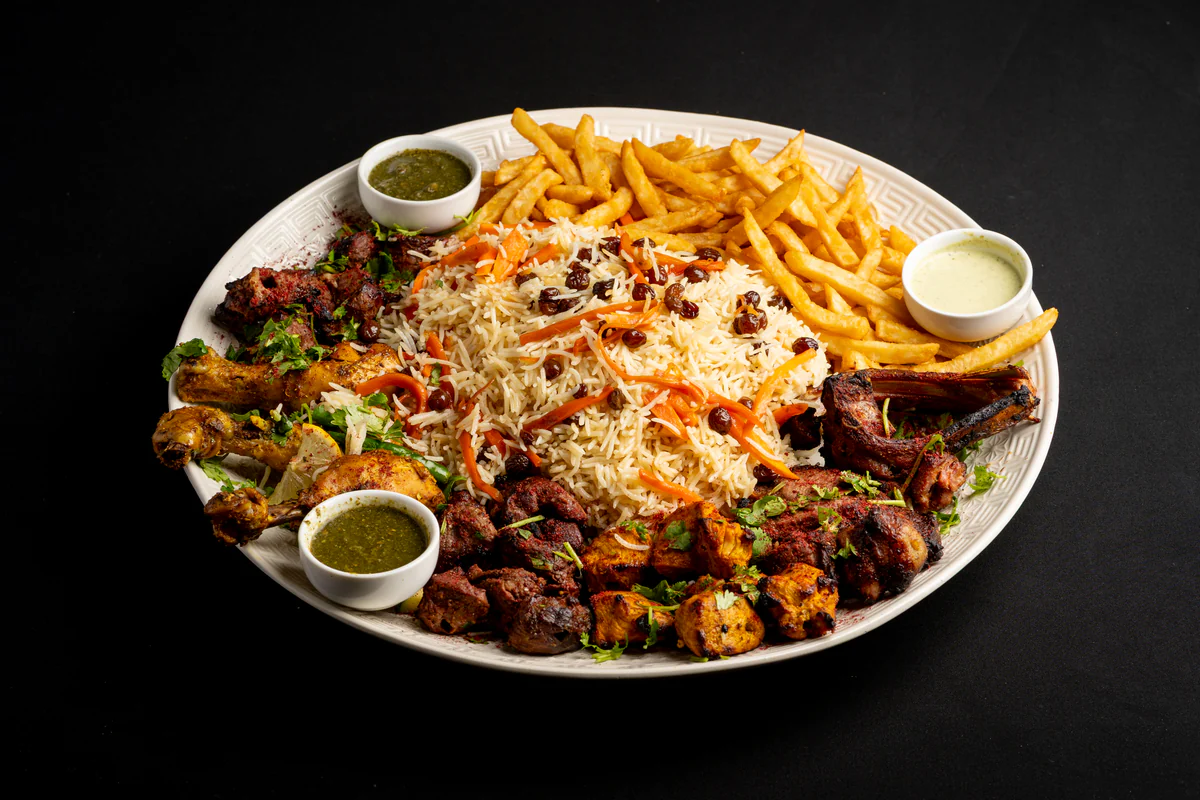
None of this was designed to be eaten as one plate in front of one person. Rice goes down in the centre, kabob on top of it or beside it, bolani and salad and yogurt around the edge, naan within reach of everybody. You take from whatever is nearest and pass the rest.
Two or three plates each is about right. Tea is not a course. It arrives before the menu does and is still arriving when you stand up to leave.